What are crow's feet?
What causes crow's feet?
How to prevent eye wrinkles?
Skincare products for eye wrinkles
Discover SkinCeuticals anti-ageing skincare for crow's feet
Did you know that the skin around the eyes is 40% thinner than the rest of your face? This is why it generally shows ageing signs quicker than anywhere else and is one of the most common areas of concern in terms of ageing. Crow’s feet, as they're often referred to, sit at the corners of the eyes, and are caused by a number of genetic and environmental factors.
In this article, we’ll take a deep dive into what crow’s feet are, their causes, and how you can improve their appearance if you so wish.
- What are crow’s feet?
- What causes crow’s feet?
- How to prevent eye wrinkles?
- Skincare products for eye wrinkles
- Discover SkinCeuticals anti-ageing skincare for crow’s feet
What are crow's feet?
Crow’s feet is a term used to describe signs of ageing, such as fine lines and wrinkles, around the eyes. They get their playful name from the way they resemble a splayed bird’s foot and fall into two main categories: static or dynamic. Static crow’s feet or eye wrinkles appear when the face isn’t moving while dynamic crow’s feet appear when the face is expressive.
What causes crow's feet?
There are a few different causes of crow’s feet and fine lines. Read on to find out some of the most common.
Natural ageing and a loss of collagen
Ageing is a natural part of life and is caused by a gradual decrease in naturally-occurring proteins such as collagen and elastin in the skin. The way our skin shows ageing can often be genetic - for some it begins in the mid 20s while others don’t see any major signs of ageing until much later.
Facial expressions
People who are very expressive often develop laughter lines quicker around their eyes. This is also the case for squinting and frowning as they cause the muscles to contract in the same place frequently.
Sun exposure
UV radiation created by the sun causes cumulative skin damage which breaks down collagen and elastin - those all-important proteins that keep the skin plump and smooth. As such, if your skin has been exposed to lots of sun throughout your life or you’ve used tanning beds, you may develop eye wrinkles quicker and more deeply.


Your lifestyle
The way you live your life can have a major impact on your skin and the way it ages. For instance, excessive stress, a poor diet high in ultra-processed foods, living in a polluted environment and smoking can all cause premature skin ageing. This is due to the way these factors create toxins and free radicals in the body that break down collagen and elastin in the skin.
How to prevent eye wrinkles?
While there isn’t any way to fully prevent eye wrinkles, we can help to prevent them from appearing prematurely and lessen their appearance.
Wear daily SPF
Applying a daily broad-spectrum sunscreen should be an essential part of every skincare routine as it protects the skin from cumulative sun damage. You should also protect the delicate eye area with sunglasses where possible, especially when in bright sunlight.
Stay hydrated
Staying hydrated is essential for your overall body health and the skin. Not only does drinking water help boost blood flow but it also helps maintain good elasticity levels in the skin. Try to drink around two litres of water a day, or six to eight cups as per NHS guidelines.
Prioritise sleep
There’s a reason the term ‘beauty sleep’ exists and that’s due to the important role our rest time has on the skin. When we’re asleep, the skin works hard on many important functions such as repairing damage it’s faced in the day, delivering nutrients and oxygen to the skin, and replacing damaged skin cells with new ones in its regeneration process.
Maintain a healthy lifestyle
When you fuel your body correctly with nutritious food, plenty of water, and take plenty of rest, it shows on your skin. This is because leading a healthy lifestyle allows the skin to produce collagen and elastin adequately, perform its repair and rejuvenation processes, and deliver blood and oxygen to the skin and improve radiance.
Skincare products for eye wrinkles
Another important part of preventing premature skin ageing around the eye area is with a comprehensive skincare routine. Read on to find out which products you should add to your morning and evening regime.
Anti-ageing eye creams


A.G.E. Advanced Eye For Dark Circles
Eye cream suitable for Dry & Normal Skin
“They say the eyes are the first area to show signs of ageing. And it’s a common concern for our patients as collagen declines and the skin is subject to glycation,” explains Dr Wassim J Taktouk, an award-winning aesthetic doctor. “So, it is important that we can recommend a cream that can protect collagen and elastin, and SkinCeuticals A.G.E. Advanced Eye ticks all the boxes”.
Our formula with Flavonoids, proxylane and matrixyl helps defend against glycation and support the skin’s integrity and supports the skin’s natural firmness and elasticity. Finally, it contains glycyrrhetinic acid within our formula which helps target dull skin tone. “This cream also packs a punch with the added benefit of reflective white particles, so it disguises the dark circles while working on the skin around the eyes,” Dr Taktouk adds.
Alternatively, SkinCeuticals Eye Balm is suitable for dry and ageing skin as it helps to restore essential lipids around the delicate eye area.
Retinol


Retinol 0.3 Face Cream For Ageing Skin
Concentrated facial cream for Normal & Oily Skin
Retinol is a clinically proven skincare ingredient shown to improve the appearance of eye wrinkles and crow’s feet by stimulating skin-cell renewal and collagen production. It can be incorporated into your skincare routine with a night treatment such as SkinCeuticals 0.3 Face Cream which contains 0.3% pure retinol and is enhanced with the latest stabilisation and delivery technologies to ensure a steady, even release. Our formulation with soothing bisabolol helps minimise skin irritation. Retinol products should be applied in the evening and followed the next day with a broad-spectrum sunscreen. This is due to the way retinol makes the skin more photosensitive.
Vitamin C
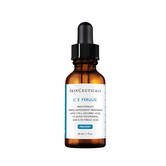


C E Ferulic For Visible Signs of Ageing
Vitamin C Antioxidant Serum For Normal & Dry Skin Types
Vitamin C (L-ascorbic acid) is an antioxidant that helps protect the skin from premature ageing. It does this by neutralising free radicals on the upper layer of the skin and helping to prevent the impact of ozone damage to skin. Applying it topically with a serum such as SkinCeuticals C E Ferulic is an effective way of reaping the benefits of vitamin C as it contains triple antioxidant protection: 15% pure vitamin C (L-ascorbic acid), 1% vitamin E (alpha tocopherol), and 0.5% ferulic acid. Together these ingredients make up a formula that’s proven to prevent up to 48% less oxidative free radical damage in the skin caused by the interaction of UV, pollution and metal*.
*Measure of 4 hydroxynonenal (4HNE) lipid peroxidation marker indicative of oxidative stress. 4-day in vivo clinical study, 13 subjects. C E Ferulic applied daily vs untreated. Skin samples collected for 4HNE protein analysis at the end of study.
SPF
Many people don’t realise that one of the best products for eye wrinkles is a broad-spectrum SPF. Sunscreen protects the skin from cumulative sun damage which accounts for around 80% of premature ageing in the skin. That’s why dermatologists always recommend adding it into your skincare routine as early as possible. Look for a formula that is broad-spectrum (meaning it protects the skin from both UVA and UVB rays) and that it works with your skin type. SkinCeuticals has a range of SPF options for mature, dry, oily and sensitive skin types.
In-Clinic Under Eye Wrinkle Treatments
If your aim is to get rid of (or significantly reduce) under-eye wrinkles, you may need to have a professional aesthetic treatment in a clinic. Here are some of the most popular aesthetic treatments to consider.

Dermal Filler
Dermal filler is an aesthetic treatment that addresses a loss of volume in the face. It can also be used to smooth the skin and reduce the appearance of wrinkles. This is usually achieved with a gel-like substance such as hyaluronic acid which fills in areas where there are lines and wrinkles - such as around the eyes.
Laser Treatments
Laser treatments improve the overall tone and texture of the skin by triggering the skin’s natural healing process. This in turn stimulates collagen production and gives the skin a fresher, more youthful appearance. Laser treatments also remove damaged or dead skin on the surface which improves radiance and overall skin tone.
Discover SkinCeuticals anti-ageing skincare for crow's feet
If ageing signs around your eyes is one of your main areas of concern, SkinCeuticals can help. Our patented formulas and clinically proven formulas, including our expert routine for tackling signs of ageing, can help to target crow’s feet and eye wrinkles and prevent premature signs of ageing in younger skin.
Find your nearest SkinCeuticals store or clinic using our handy store finder, and find your perfect post-treatment routine here.
FAQs
Is it possible to prevent crow's feet?
You cannot completely prevent ageing signs such as crow’s feet but you can prevent them appearing prematurely with an anti-ageing skincare routine.
Does skincare help with crow's feet?
Yes, skincare can help to improve the appearance of crow’s feet but it cannot completely get rid of them as they are part of the skin’s natural ageing process. The best skincare for helping with crow’s feet includes products such as a vitamin C serum which protects the skin from environmental free radical damage and boosts the production of collagen; a targeted eye cream that hydrates and protects the delicate eye area; and a night treatment containing retinol to boost collagen production and accelerate skin-cell turnover. Most vitally, your daily routine should always end with a broad-spectrum sunscreen to protect the skin from cumulative sun damage and premature skin ageing.
What are the best professional treatments for crow's feet?
The best treatments for improving the appearance of crow’s feet include injections, dermal fillers, and laser treatments. These must always be performed by a professional dermatologist or aesthetician.
What age do crow's feet form?
The age that crow’s feet start to form can vary from person to person depending on a range of factors including genetics, lifestyle, and exposure to the sun.
Can you use retinol for under eye wrinkles?
Yes, you can use retinol for improving the appearance of undereye wrinkles but you should use a product formulated specifically for this area. As the skin around the eyes is very delicate, a regular retinol cream or treatment may be too harsh for the eye area. Retinol should always be followed the next day with a broad-spectrum sunscreen as it makes the skin more photosensitive.
Related Articles
Best Eye Cream For Wrinkles & Fine Lines
Vitamin C for Skin Wrinkles: Essential for Healthy Looking Skin
Featured Products
C E Ferulic For Visible Signs of Ageing
Vitamin C Antioxidant Serum For Normal & Dry Skin Types
Retinol 0.3 Face Cream For Ageing Skin
Concentrated facial cream for Normal & Oily Skin