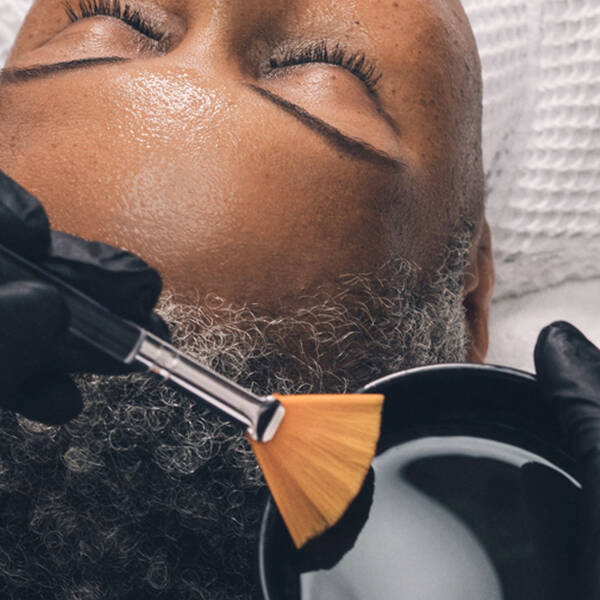
This treatment involves a deep chemical peel using
trichloroacetic acid (TCA) and phenol to stimulate
colagen production and address skin concerns such as
wrinkles, scarring, and pigmentation issues.
The price of a deep chemical peel usually ranges from £300 -
£1,500+ depending on your treatment provider.
Average Downtime and Post-Chemical Peel Care
The average downtime experienced after a TCA peel can be up
to two weeks, during this time special TCA peel aftercare
and pre-cautionary measures must be followed; avoiding sun
exposure, heat treatments and exfoliating products.
Appropriate
skincare after the chemical peel
must also be used to aid skin recovery and minimise side
effects.
*phenol peel recovery is usually around 3 weeks but
skin can be healing for up to 3 months
A deep chemical peel is a skin procedure that has a
classification including compounds of trichloroacetic
acid (TCA) in concentrations of 50% or above and blends
containing 88% phenol.2 Phenol peels were the
first deep chemical peel treatment, so deep chemical
peels are sometimes referred to as “phenol peels”. There
are
other types of chemical peel treatments, each with its own benefits for the skin.
How Chemical Peel Treatment works
Deep chemical peels involve the use of these acids to
cause the destruction of the epidermis, reaching as far
as the mid-reticular layer of the dermis. For the most
part, a deep chemical peel will cause protein
coagulation, commonly referred to as “frosting.”3
Like many other aesthetic modalities such as lasers or
radiofrequency devices, a deep chemical peel treatment
also works on the principle of controlled wounding. This
process destroys unwanted tissue while stimulating the
body’s natural wound response to increase the production
of collagen, elastin and glycoglycosamines (GAGs) such
as the water-retaining hyaluronic acid.
Important Information About Deep Chemical Peels
A deep chemical peel or phenol peel is not recommended
for patients with darker skin tones as there is a risk
of scarring. The activation of surrounding melanocytes
can result in severe and prolonged hyperpigmentation.
Patients with darker skin tones should consult with an
experienced medical professional for advice on other
available modalities that may achieve similar results to
a deep chemical peel.
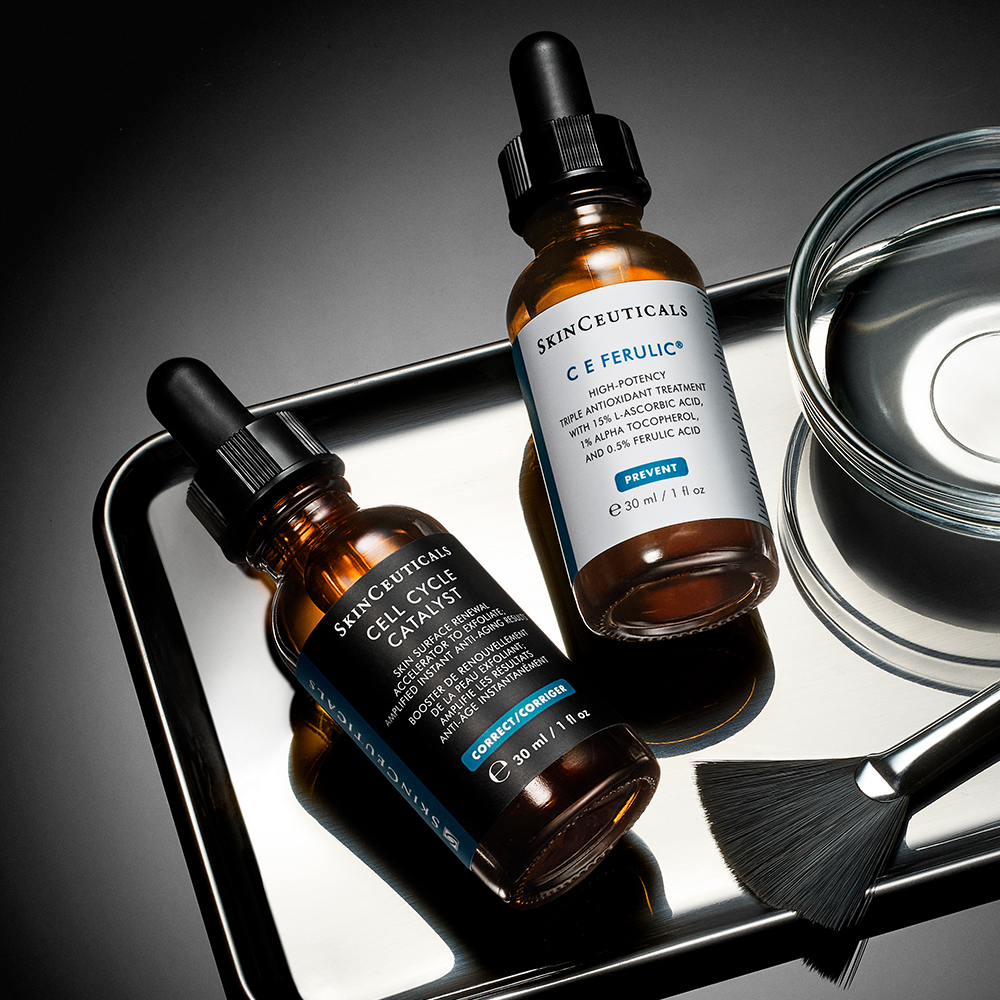
It is important to use appropriate skincare after chemical peels. Using the right cleansers, antioxidants, moisturisers, serums, and sun protection (whilst limiting sun exposure) can complement the outcome. Below are SkinCeuticals’ recommended products for post-chemical peel care:
*If you are considering an aesthetic treatment, always consult a Medical Professional. SkinCeuticals are cosmetic skincare products for topical use. Only apply on healed skin. Always wear SPF.
Frequently Asked Questions About Deep Chemical Peel Treatments
The most powerful deep chemical peel is often referred to as the Baker Gordon phenol peel. This peel containing phenol, croton oil, septisol and water was the standard until 2000 when a plastic surgeon named GP Hetter published a suite of academic papers revealing a remarkable discovery. Through extensive research, Hetter was able to show that in fact, croton oil was the active agent creating dermal change, not phenol. With a seemingly simple innovation, Hetter lowered the concentration of phenol of the classic Baker Gorden phenol peel and varied the concentration of croton oil giving physicians more control and precision. The Hetter formulations, along with high concentration (≥50%) TCA (trichloroacetic acid), are the new standard deep chemical peel formulations.12 It’s important to note that a deep chemical peel treatment is not always the appropriate or most effective way to treat an unwanted skin condition, and clients considering a treatment such as a phenol peel should consult with a trusted medical professional before proceeding with a deep chemical peel.
The best serum to use after microneedling is one that contains very moisturising ingredients such as hyaluronic acid. Humectants attract and bind water to the skin, strengthening the skin barrier and helping it to heal effectively. Discover SkinCeuticals Hydrating B5, suitable for use post-microneedling on healed skin.
Deep chemical peel recovery time is extensive but will vary due to factors ranging from the peeling solution used, contact duration, and an individual’s healing response.
Generally, 4 to 5 days post-procedure peeling will likely have begun.3 Then a two-week healing process begins with peeling, irritation, crusting and discomfort. In some cases, swelling may persist for up to 3 months after a deep chemical peel treatment, or “phenol peel”,4 and atypical flushing may accompany exercise for up to a year.
Keeping the treated area clean is paramount, it's vital to follow your physicians strict chemical peel aftercare advice to reduce chance of infection and gain optimum results.
A deep chemical peel reaches a depth of .60-.80mm in the skin, which translates to the lowest layer of the dermis, the reticular dermis. A deep chemical peel, most commonly a high-concentration TCA or phenol peel, is capable of creating changes in the skin that persist for 15-20 years. Although healing may take months, the deep chemical peel before and after photos reveal a remarkable difference after just one peel and the results can last up to 10 years.
The deep action of a phenol peel comes at the expense of a very significant inflammation event in the skin and should not be repeated for at least 2-3 years. Most patients who have opted for the dramatic results of a phenol peel, TCA peel, or deep chemical peel do not repeat the procedure at all, choosing to focus on other modalities that address factors a deep chemical peel cannot, such as sagging of the skin. Of course, there are some factors, such as severe scarring or very deep rhytids, that may benefit from a repeated deep chemical peel. A qualified and experienced physician should decide if a repeated deep chemical peel is advisable or not. But, as the before and after photos of a phenol peel or other deep chemical peel can attest, a single treatment is often sufficient.
A true deep chemical peel includes solutions of phenol with croton oil or trichloroacetic acid (TCA) in concentrations of 50% or higher.6 These peels reach the reticular dermis, the lowest layer of the dermis and will cause significant erythema (redness) and peeling. However, when the peeling occurs after a deep chemical peel will depend upon many factors such as the health of the skin at the time of the deep peel, the technique used to apply the deep chemical peel or phenol peel, and the post-chemical peel care. While some patients may begin peeling within a few days after a deep chemical peel or phenol peel, for others the onset of peeling may occur later and/or endure longer.
Pre and post-procedure care are essential to the overall success of a deep chemical peel. Because the deep chemical peel or “phenol peel” reaches deep into the dermis, there will be a significant downtime - usually around 2 weeks. During this time skincare may be limited to a gentle cleanser, simple moisturiser or ointment and sunscreen. After this acute period, skin actives such as vitamin C may be suggested by the performing physician to aid the recovery of the skin, but it’s important to consult with the physician for specific post-procedural instructions after a deep chemical peel and adhere assiduously to their chemical peel aftercare recommendations.
A deep chemical peel or phenol peel is not performed on patients with darker skin tones due to a very significant risk of adverse effects such as scarring and pigmentation. Other factors such as Roaccutane or isotretinoin use within the past 6 months, any active inflammation or wound in the peel area, any warts on the face or active herpes breakout will also preclude a patient from receiving a deep chemical peel. Anyone with a history of keloid scarring or skin disorders such as psoriasis and atopic radiation should also forego a deep chemical peel treatment. Finally, patients who are pregnant or breastfeeding should also forego a deep chemical peel procedure.7
A deep chemical peel is a powerful medical procedure with significant discomfort. Different measures to control the level of discomfort always accompany a deep chemical peel. Although it’s up to the practising physician to determine the proper pain control, oral sedation and pain relievers are common.8 Another factor influencing the discomfort of a deep chemical peel or phenol peel is the time required to perform the “phenol peel.” Multiple safety pauses occur during the procedure to moderate the skin response and ensure that the patient is enduring the deep chemical peel procedure safely. A deep chemical peel treatment on the full face may take up to 90 minutes to perform because of these factors.
Because of the long-standing misconceptions about phenol peel solutions (as discussed above in “What is the deepest chemical peel?”), phenol is often used in stronger deep chemical peel solutions. However, the true peeling agent in a deep chemical peel is croton oil which is capable of reaching the deepest layers of the skin. Although trichloroacetic acid (TCA) peels may come in various concentrations, 50-75% being standard for delivering a deep chemical peel, they are not as predictable in their ablative depth as a phenol peel and have become less utilised due to this unreliability and potential complications.9 It’s important to note that in certain formulations or with lower concentrations, a TCA peel solution may also deliver results similar to a superficial or medium-depth peel.
A deep chemical peel treatment is capable of reaching the lowest level of the dermis, the reticular dermis. This means that a deep chemical peel or phenol peel, can potentially remove 6 layers of the skin. This explains the longer deep chemical peel recovery time but also the dramatic deep chemical peel before and after photos. Other factors influence the depth reached by any deep chemical peel such as the peel concentration, the patient’s skin type, the preparation of the skin, and the application technique. For example, the reason a deep chemical peel is preceded by a cleanse and the application of acetone is to ensure deeper penetration and even results.
Your physician will provide specialised medical chemical peel aftercare advice which is vital to adhere to.
*Always consult your physician before undergoing this procedure
Soft-foaming gel cleanser exfoliates with a dual-acid blend while effectively cleansing impurities and long-wear makeup without stripping the skin of moisture.