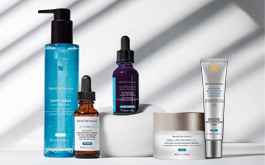
A chemical peel is an effective anti-ageing skin treatment that can help improve the appearance of a range of concerns such as deep wrinkles, fine lines, hyperpigmentation and post acne marks. But, as this treatment disturbs the skin’s surface by exfoliating dead skin away and creating minor injury, the correct after care is needed to ensure the skin barrier remains strong and you get the best results possible.
In this simple guide, we walk you through how a chemical peel works, its benefits to the skin, and why the right aftercare is integral to your final result.
What is a Chemical Peel?
A chemical peel is a skin treatment that uses chemical exfoliants such as salicylic, glycolic or mandelic acids to exfoliate the top layer of the skin. It is applied by a professional, usually with a brush or gauze, after the skin is cleansed and prepped.
Most clinics offer a choice of light, medium and deep peels which use different strengths of exfoliating acids. The best one for you will depend on the severity of your skin concerns such as hyperpigmentation, post acne marks and deeper wrinkles, or whether you’re just looking to simply improve overall radiance and skin texture. You should discuss this with your clinician before the treatment.
The skin peel process removes dead skin from the surface of the skin and encourages skin cell renewal and stimulates the production of collagen, elastin, and hyaluronic acid. This means that some flaking should be expected in the days after the treatment as the dead skin flakes away. This is why it’s so important to make sure the skin is well moisturised in the days after treatment to reinforce the skin barrier.
Benefits of Chemical Peels
Almost all skin types can benefit from a skin peel as long as the strength of peel is suitable for your concerns and your skin is properly prepared. Read on to learn more about a chemical peel’s main benefits to the skin.
Improves skin texture and tone
If you have areas of hyperpigmentation or dark spots on your face, e.g from sun damage, a peel can help to create a more even overall skin tone.
Reduce post acne marks and wrinkles
By removing dead skin from the surface of the skin, accelerating the skin’s natural renewal process, and stimulating collagen and elastin production, smooth skin is revealed beneath. This can help to reduce the appearance of post acne marks and wrinkles on the surface.
Unclog pores
Chemical peels remove dead skin and reduce sebum from the pores which helps to reduce congestion and minimise the appearance of their size.
Remove dead skin cells
Often when the complexion appears dull, it’s due to a buildup of dead skin cells on the surface. A chemical peel removes this dead skin helping to restore a brighter and more radiant skin tone, and encourages natural skin cell renewal.
Clarifies and renews the look of skin
Chemical peels accelerate the skin’s natural renewal process which sheds dead skin and reveals the newer, smoother skin beneath. This can help to improve skin clarity.
Enhances skincare product effectiveness
Once dead skin cells have been removed from the skin’s surface, the skin can absorb the products in your usual skincare routine much more effectively.
Preparing for a Chemical Peel
Prior to your chemical peel treatment, the clinic you are visiting will provide you with important pre-care information to ensure a safe and effective treatment. This is important for getting the best results from your treatment. You can find some of our tips which may be similar below:
- Stop using retinol 1 week prior to your treatment, and stop using exfoliating cleansers and serums 3 days prior to your treatment.
- To prepare the skin, we recommend SkinCeuticals Cell Cycle Catalyst, which can be used every day 2 weeks before your treatment, including the day of for best results*. It accelerates skin surface renewal cycles and amplifies anti-ageing results such as fine lines and radiance.
"The SkinCeuticals Cell Cycle Catalyst is an innovative multi-acid formulation with a comprehensive combination of gentle acids to provide a controlled peel effect in a manner that doesn’t irritate or compromise the skin barrier. The product works to address a range of ageing concerns including wrinkles, pigmentation, and radiance. As it is gentle on the skin barrier, it lends itself perfectly as a preparative step in advance of chemical peels. It can also be used as an at-home treatment to address signs of aging. I like to think of this approach as a synergistic and multidirectional method."
– Dr. Ana Mansouri, Aesthetic Doctor
- If you prefer a nighttime cream, Glycolic 10 Renew Overnight can also be used as a light exfoliant, an ideal complement to chemical peels to pre-condition skin and extend results*. This will need to be stopped 3 days prior to your peel.
*If you are considering an aesthetic treatment, always consult a Medical Professional. SkinCeuticals products are cosmetic skincare products for topical use. Do not inject. Only apply on healed skin.
- You should also avoid sun exposure for 2 weeks leading up to your treatment, as this can leave the skin inflamed and more sensitive than usual. The skin barrier should not be compromised in any way for best results and to avoid adverse reactions.
- Make sure you are well hydrated: this includes internally and externally. To do this, ensure you’re drinking the recommended six to eight glasses of water per day and using a hydrating serum and moisturiser morning and night.
- It’s very important that before your treatment, you have a thorough consultation with your practitioner to discuss your concerns, goals, and expectations. This will ensure they use the right strength of peel.
Aftercare for Chemical Peels
After a chemical peel, your skin may appear slightly red and sensitive. It may also feel very fresh and clean. To get the best results over the next few days, follow our simple after-care tips on healed skin, along with the advice of your personal clinician.
- Apply a gentle, hydrating moisturiser regularly. This can be as many times as needed. Make sure your moisturiser contains super hydrating ingredients such as hyaluronic acid, glycerine, and ceramides. Triple Lipid Restore 2:4:2 and Phyto Corrective Serum are both suitable for use post procedure*.
- As your skin will be particularly photo sensitive after a chemical peel, try to avoid sun exposure for 2 weeks post peel. You should also apply a minimum of SPF 30 or higher all over your face and neck, applying frequently and generously, and wear a hat when outside. We recommend Advanced Brightening UV Defense SPF 50.
- Peeling and flaking is normal after a peel and part of the shedding process. Do not pick the skin but moisturise it instead.
- Use a soft, non-irritating cleanser in the morning and before bed. Harsher cleansers with exfoliating or active ingredients may disrupt the skin barrier during the skin’s healing process. We recommend SkinCeuticals Gentle Cleanser, our mild cream face cleanser.
- Try to avoid wearing makeup post-chemical peel, as this can irritate skin, stop you from applying moisturiser, and may also disturb the skin barrier during the flaking process. Consult your clinician on appropriate timeframes.
*If you are considering an aesthetic treatment, always consult a Medical Professional. SkinCeuticals products are cosmetic for topical use. Only apply on healed skin.
The Role of Moisturiser After a Chemical Peel
Flaking and peeling after a chemical peel is very normal and part of the skin’s healing process. But, it’s super important that you aid this process by liberally applying moisturiser. This will help to keep the skin comfortable as the dead skin flakes away and provide the skin barrier with essential lipids it may have lost during the treatment.
Choosing the Best Moisturiser: Ingredients to Look For
When looking for the right moisturiser to use post-peel, it’s important that it contains super hydrators such as hyaluronic acid and ceramides. Hyaluronic acid, for instance, is a naturally occurring humectant found in the skin that attracts and retains water.
By applying it topically, we can help to add plumpness to the skin as we age or when the skin is compromised - such as after a chemical peel. Ceramides (naturally occurring fatty acids), on the other hand, are also integral to skin hydration as they help to make up the building blocks of the skin barrier. This means they help to prevent water loss from the skin and the entry of infections or environmental aggressors.
Ingredients to Avoid
You should also make sure your moisturiser doesn’t include anything that could potentially irritate the skin such as retinol, fragrance or alcohol. While your skin may tolerate ingredients such as this normally, they should be avoided while the skin is healing.
Types of Moisturisers
There are many different types of moisturisers to choose from depending on your personal preference and skin type.
Gel moisturisers tend to be water based and oil-free making them lightweight and best suited to oily and combination skin types. Creams are thicker and contain humectants to draw water in as well as oil-based ingredients which stop water from escaping. You may also prefer a lotion which is a lighter alternative to a cream.
SkinCeuticals Products Suitable as Aftercare for Chemical Peels
Triple Lipid Restore 2:4:2 is a face cream for mature skin, formulated with a maximised concentration of lipids: 2% pure ceramides, 4% natural cholesterol, and 2% fatty acids. This unique lipid correction cream for ageing skin contains the first 2:4:2 cholesterol-dominant ratio to help restore skin's external barrier, while nourishing ageing skin for improvement in visible signs of accelerated ageing. Triple Lipid Restore 2:4:2 has been proven to improve the visible appearance of skin smoothness, pores, and overall radiance.
Phyto Corrective Mist is a hydrating facial mist that is clinically proven to provides all day hydration and immediately reduce visible redness. A botanical blend of cucumber, thyme, olive leaf, and rosemary extracts soothes and calms the skin, while a 6.2% blend of hyaluronic acid and glycerin helps draw and retain water in the skin. This friction-free facial mist is easy to layer, complements every regimen, and can be reapplied throughout the day, even over makeup, for all-day hydration.
Phyto Corrective Serum is a calming, lightweight, non-oily, hydrating gel serum with botanical ingredients ideal to soothe and hydrate skin. Phyto Corrective Gel contains hyaluronic acid, cucumber, thyme, and other botanical ingredients, making it an ideal hydrating moisturiser. It also features mulberry to help minimise the appearance of discolouration and promote a clear, fresh-looking complexion.
Getting the best results from a chemical peel
Understanding the importance of the right aftercare is integral to getting the best results from a chemical peel. Make a note in your diary to stop using harsher skincare in the week leading up to your treatment and make sure you have a tried-and-tested moisturiser on hand to use post treatment.
Want to share your experience of a chemical peel or perhaps you have a question for our expert team? Comment below and join the conversation.
FAQs
What to put on your face after a chemical peel?
After a chemical peel, you should keep your skincare minimal yet hydrating. This should include a gentle creamy cleanser, a hydrating serum and a moisturiser. You should also use a broad-spectrum sunscreen in the daytime as your skin will be particularly photosensitive.
How to prepare for a chemical peel?
To prepare your skin for a chemical peel, stop using harsh skincare such as AHAs and retinol a week before. You should also avoid direct sunlight where possible and make sure you’re protecting your skin every day with a broad-spectrum sunscreen.
How soon should I moisturise after a chemical peel?
Your clinician will apply a moisturiser and sunscreen to your skin after a chemical peel. You do not need to apply anything until bedtime when you should use a gentle cleanser and apply moisturiser.
What moisturiser to use after an AHA or BHA peel?
You should use a gentle moisturiser that’s rich in humectants such as hyaluronic acid and ceramides as these ingredients will help to support barrier function and aid the healing process. Avoid moisturisers containing fragrance, alcohol and active ingredients as they may cause irritation while the skin is compromised.
Featured Product


Phyto Corrective Masque
Calming botanical mask for all skin types

Glycolic Renewal Cleanser
Soft-foaming gel cleanser exfoliates with a dual-acid blend while effectively cleansing impurities and long-wear makeup without stripping the skin of moisture.


Glycolic 10 Renew Overnight
Discover the Glycolic 10 Renew Overnight