Acne vulgaris
Acne vulgaris is the general term used to describe inflammation around the hair follicle and sebaceous glands. This condition results in a range of symptoms on the skin such as pustules, comedones and cysts which can be mild, moderate or severe. Acne is thought to be caused by a change of hormones in early adulthood (although it can persist into later adulthood) which cause an increase in sebum and oil in the sebaceous glands. It can also be the result of a build-up of bacteria in the follicles.
Treatments
Severe forms of acne should be diagnosed by a professional dermatologist or doctor and further treatment recommended depending on its severity. Milder forms may be treated with targeted skincare that help to combat congestion and the over-production of sebum. It’s very important, however, that no matter what your treatment plan is that acne-prone skin is protected each day with a broad-spectrum sunscreen. This will protect the skin from environmental aggressors that can increase sebum production and congest the pores, while preventing UV-induced ageing.
Whiteheads
A whitehead appears when the opening of a pore becomes clogged with bacteria or sebaceous debris, and a white head forms on the top of the skin. Sometimes whiteheads can become inflamed and red and turn into a larger spot, or simply disappear with time.
Treatments
Severe forms of acne should be diagnosed by a professional dermatologist or doctor and further treatment recommended depending on its severity. Milder forms may be treated with targeted skincare that help to combat congestion and the over-production of sebum. It’s very important, however, that no matter what your treatment plan is that acne-prone skin is protected each day with a broad-spectrum sunscreen. This will protect the skin from environmental aggressors that can increase sebum production and congest the pores, while preventing UV-induced ageing.
Blackheads
Blackheads appear on the surface of the skin when debris becomes stuck inside a pore. When this debris is exposed to oxygen - a process called oxidation – it turns black. As with whiteheads, trying to remove black heads with your fingers is best avoided as it can leave marks and pierce the top layer of the skin, introducing infection.
Treatments
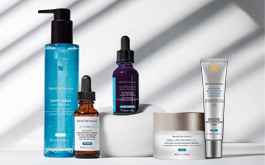
Stay on top of black heads by using a pore-clearing cleanser. Follow this with a serum suited to blemish-prone skin such as Silymarin CF. This powerful antioxidant protects the skin from environmental damage and reduces excess sebum and oil oxidation in the skin. End your routine with a mattifying mineral sunscreen.
Comedones
Closed comedones are best described as bumps or lumps beneath the surface of the skin and are a form of blemish associated with acne. Unlike whiteheads or blackheads, they don’t come to a head at the opening of the pore, or become red and sore like a spot would, but are caused by the same thing: oil trapped within a hair follicle.
Treatments
As comedones are caused by a build-up of oil, the most effective treatment is with skincare suited to blemish-prone skin. Look for formulas that contain salicylic and glycolic acids that decongest the pores and sweep away excess residue.