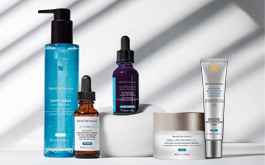
Step 1: Glycolic Renewal Cleanser
Who is it for?
This exfoliating cleanser is a simple way to instantly bring a glow back to dull, discoloured and ageing skin.
What does it do?
SkinCeuticals Glycolic Renewal Cleanser has a soft foaming formula that’s enriched with 8% Glycolic Free Acid Value to effectively cleanse impurities and long-wear makeup.
When should you apply it?
Gently massage a small amount of the cleanser into a wet face and neck (we recommend the equivalent of a five pence piece).
Step 2: Phloretin CF Serum
Who is it for?
Phloretin CF Serum is suitable for combination, oily and combination skin types that’s prone to dark spots and photo damage.
"Phloretin CF is the first thing I recommend for patients wanting to harness the power of vitamin C but have a tendency to discolour the skin. I love the gel formulation too which is particularly popular for my male patients as it is very comfortable to use after shaving."- Dr. Wassim Taktouk, Cosmetic Doctor
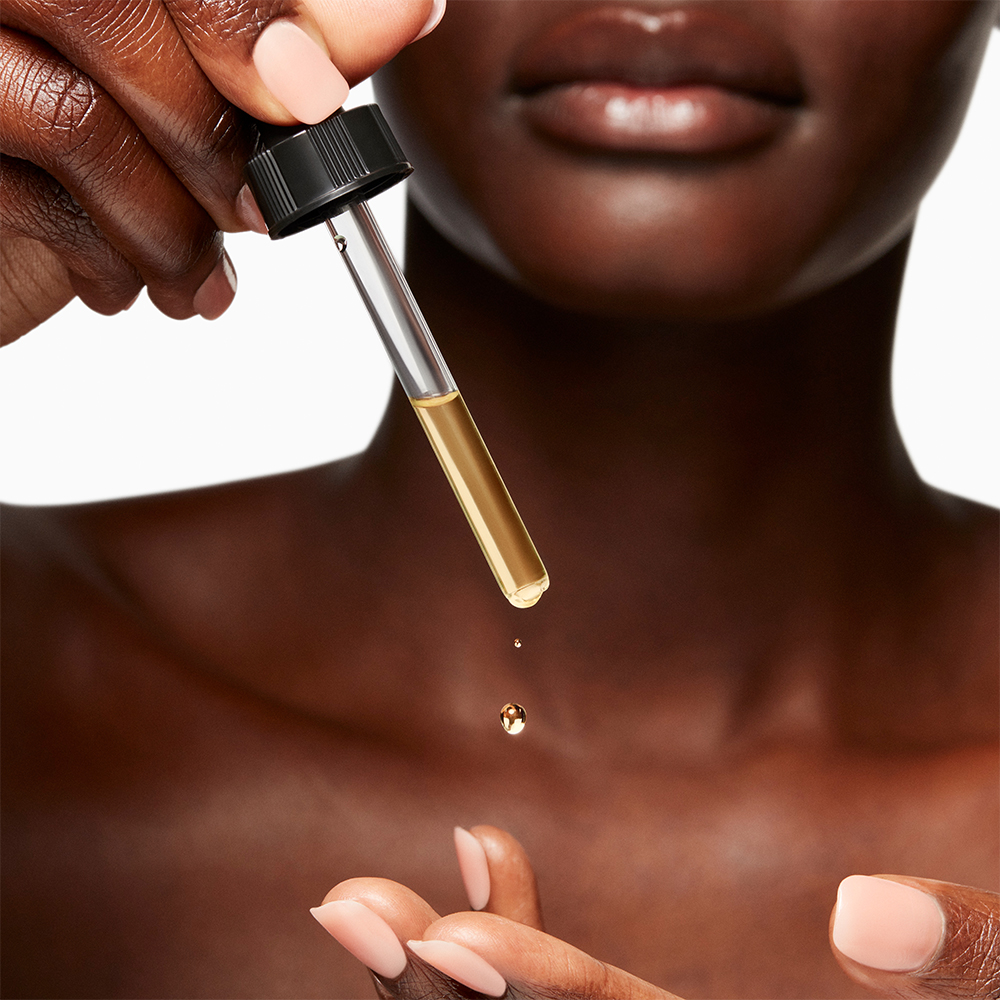
What does it do?This potent daytime vitamin C serum is formulated with three antioxidants: 10% pure vitamin C [l-ascorbic acid], 2% phloretin and 0.5% ferulic acid. Together these ingredients help to protect the skin against free radical damage and visibly improve skin tone and texture. The appearance of fine lines, dullness and discolouration are also improved.
When should you apply it?
Apply 4-5 drops of Phloretin CF each morning after cleansing to the face, neck and chest and follow with your usual moisturiser.
Step 3: Discoloration Defense Serum
Who is it for?
Discoloration Defense Serum is suitable for combination and oily skin types and for anyone whose dull complexion is caused primarily by brown patches and post-blemish marks. It is also suitable for all skin tones.
What does it do?
This corrective serum is clinically proven to reduce the appearance of discolouration including brown patches and post-blemish marks with 1.8% tranexamic acid and 5% niacinamide. It also helps to improve overall skin tone and reveal a brighter, more radiant complexion.
When should you apply it?
Apply 3-5 drops of Discoloration Defense Serum to the face, neck and chest each morning after applying Phloretin CF. You can also use this serum in the evening on alternate nights to Retinol 0.3. Do not apply Discoloration Defense Serum on broken or irritated skin.
Step 4: Retinol 0.3
Who is it for?
This night-time corrective cream is suitable for those who have never used retinol before and want to target the appearance of ageing signs such as fine lines, wrinkles and discolouration.
What does it do?
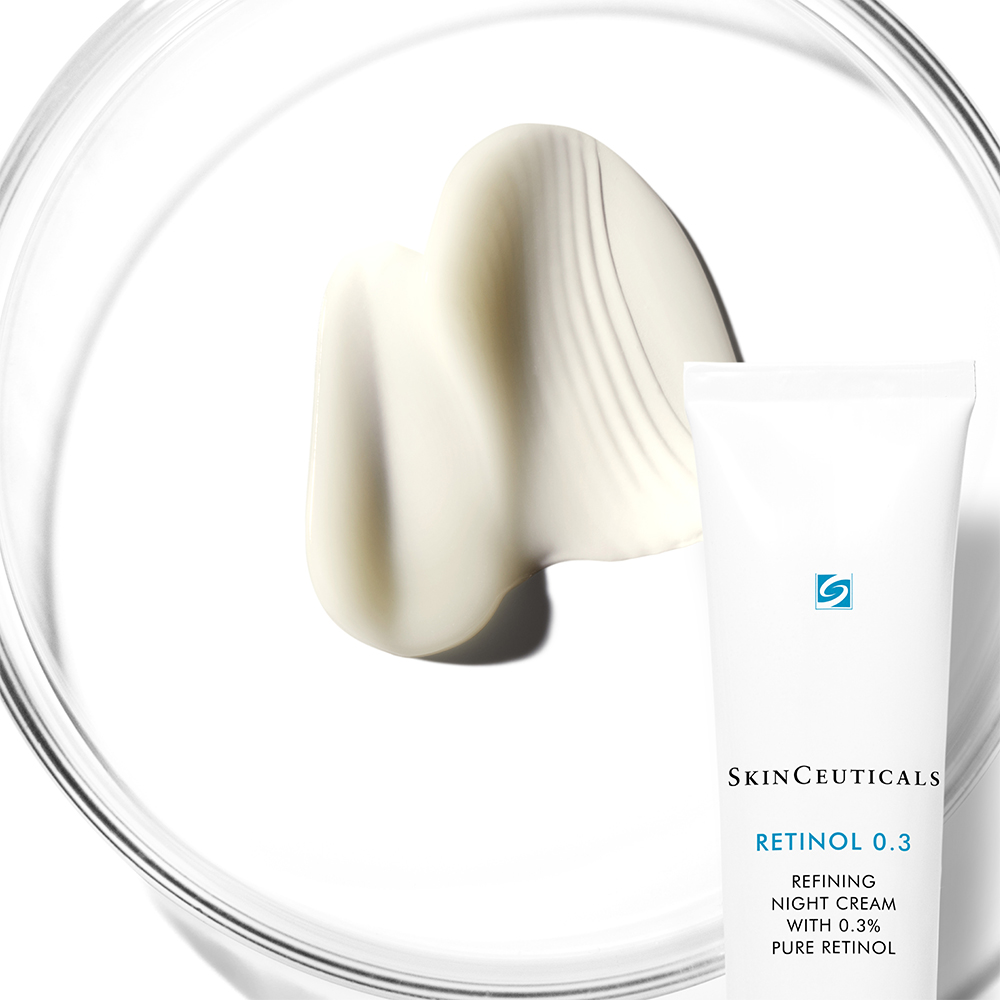
SkinCeuticals Retinol 0.3 is formulated with pure retinol and is proven to improve the appearance of fine lines, wrinkles and dark spots. It does this with an encapsulated form of pure retinol for controlled delivery that has the potency of retinol.
When should you apply it?
Apply a pea-sized amount in the evening to a clean, dry face. Initially, apply twice weekly, gradually increasing to every other night once your skin has become used to it. Wait 30 minutes after applying other products to allow the Retinol 0.3 to absorb into the skin.
Step 5: Advanced Brightening UV Defense SPF50
Who is it for?
This broad-spectrum sunscreen is suitable for all skin types, especially those concerned with discolouration and dullness.
What does it do?
Discolouration and dullness in the skin can be made worse by UV damage so a broad-spectrum sunscreen is a vital step in brightening the complexion. While most sunscreens are protective, Advanced Brightening UV Defense SPF50 also helps to reduce visible discolouration. This formula contains a combination of corrective active ingredients such as Tranexamic Acid and Niacinamide and helps reduce UV-induced discolouration. Apply every morning after your usual serum.
When should you apply it?
Apply a generous amount of Advanced Brightening UV Defense, 15 minutes before sun exposure each morning. Remember to re-apply throughout the day, especially if you swim, perspire or towel dry the face.
Follow each of these steps for a brighter, clearer and more even-looking complexion.

Featured Products

Glycolic Renewal Cleanser
Soft-foaming gel cleanser exfoliates with a dual-acid blend while effectively cleansing impurities and long-wear makeup without stripping the skin of moisture.


Phloretin CF Serum For Discolouration
Vitamin C Serum For Normal & Oily Skin Types


Discoloration Defense For Skin Discoloration
Skin Discoloration + Dark Spot Serum For Dry & Oily Skin


Retinol 0.3 Face Cream For Ageing Skin
Concentrated facial cream for Normal & Oily Skin

Advanced Brightening UV Defense SPF 50
Dual-action, lightweight sunscreen with SPF 50 that helps protect the skin from UV-induced discolouration and helps evens skin tone.